Modern SaaS Analytics Dashboard (Case Study)
Engineered a high-performance SaaS analytics ecosystem focused on live operational intelligence, scalable dashboard rendering, and enterprise-grade access control.
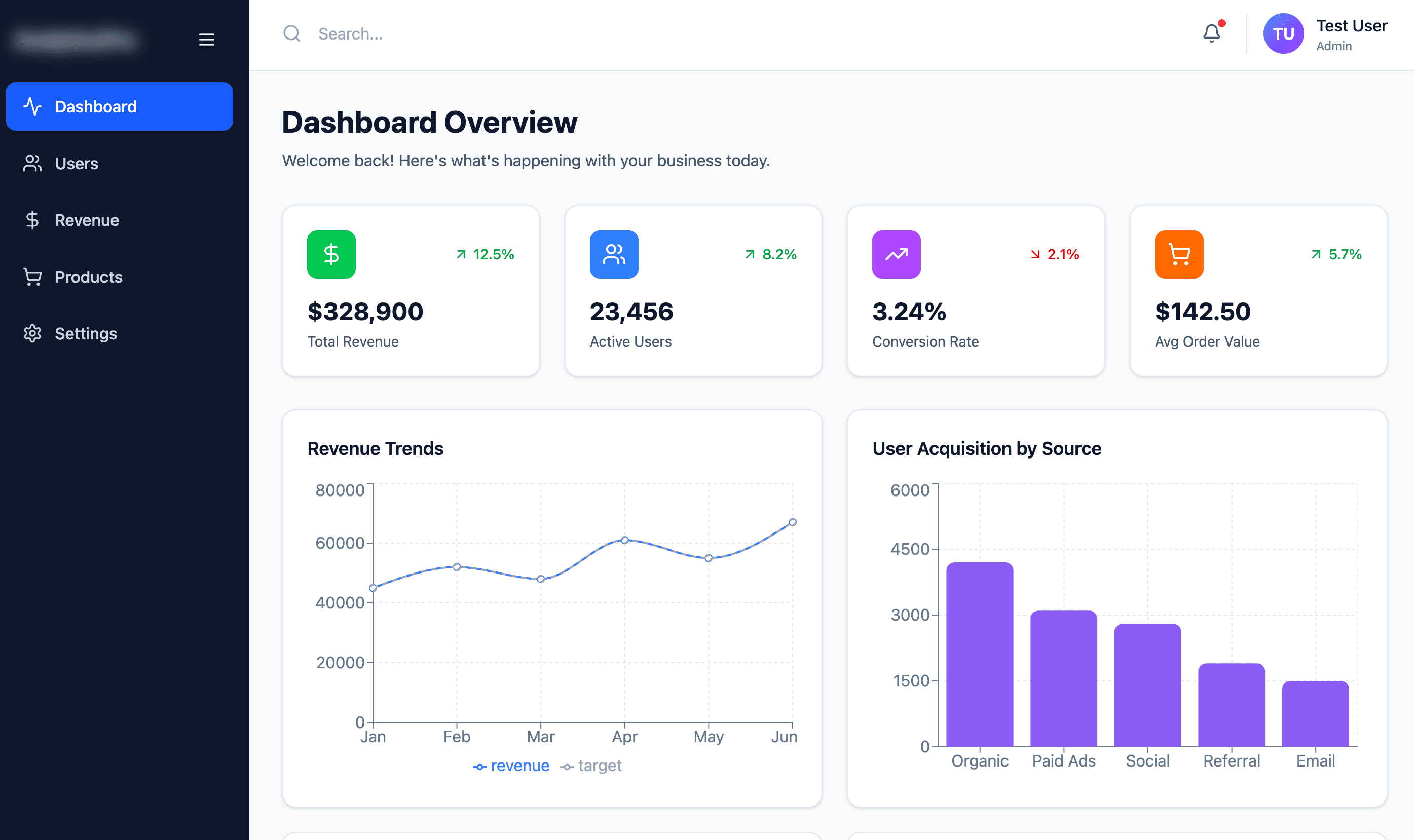
The platform tackled the common scalability issues seen in analytics-heavy systems where growing event volume, complex aggregations, and concurrent dashboard access gradually degrade responsiveness and operational visibility.
Scalable Dashboard Architecture
Conventional dashboard implementations often become bottlenecked by repeated heavy database queries, tightly coupled rendering flows, and inefficient client-server synchronization patterns.
To address this, the platform adopted modular dashboard composition, cache-aware aggregation pipelines, and read-optimized data access layers capable of supporting high-frequency analytics requests efficiently.
Data-heavy widgets, KPI modules, and reporting components operated through independently optimized query layers, significantly improving dashboard responsiveness under concurrent organizational usage.
Typed API contracts, reusable visualization pipelines, and component-isolated rendering strategies ensured maintainability while enabling rapid feature scaling across the analytics ecosystem.
Real-Time Analytics Infrastructure
Static reporting systems created operational blind spots where teams relied on delayed snapshots instead of live business visibility.
A real-time analytics layer was implemented using event-stream processing, WebSocket synchronization, and incremental aggregation systems capable of reflecting operational changes almost instantly.
User activity, transactional events, operational metrics, and system interactions were continuously processed into live dashboards powering funnel analytics, KPI tracking, behavioral monitoring, and performance intelligence.
Low-latency synchronization pipelines dramatically improved decision velocity across operational and business teams.
RBAC & Organizational Access Systems
As dashboard complexity increased, unrestricted data exposure created major scalability and security concerns across organizational environments.
This was solved using policy-driven RBAC architecture with tenant-aware permission isolation, scoped data visibility, and middleware-level authorization enforcement.
Granular access policies controlled dashboard modules, analytics visibility, reporting access, and operational actions dynamically based on organizational hierarchy and user roles.
The authorization system was engineered to scale cleanly across multi-team and multi-organization SaaS environments without introducing permission sprawl or access inconsistencies.
Cloud Deployment & Infrastructure Reliability
Traditional single-environment deployment strategies created scaling friction, inconsistent runtime behavior, and operational deployment risks during production expansion.
The infrastructure evolved around cloud-native deployment workflows, containerized service execution, and CI/CD-integrated operational pipelines capable of supporting continuous delivery at scale.
Load-aware deployment strategies, centralized observability systems, environment-aware configurations, and fault-tolerant service orchestration significantly improved deployment reliability and operational resilience.
Infrastructure decisions prioritized scalability, operational recovery, and maintainable production workflows rather than simple deployment convenience.
Event Tracking & Behavioral Intelligence
Basic event logging systems often generate noisy, fragmented, and low-value operational data that becomes difficult to operationalize at scale.
A structured event tracking architecture was implemented to transform user interactions, operational workflows, and behavioral signals into actionable analytics streams.
Custom event pipelines captured granular application activity across dashboards, workflows, authentication systems, and business modules while maintaining scalable ingestion and aggregation performance.
The event ecosystem enabled deep behavioral analysis, operational monitoring, feature usage tracking, and business intelligence generation across the entire SaaS platform.
Engineering Footprint
The platform leveraged Next.js, TypeScript, Node.js, Prisma, PostgreSQL, Redis, WebSockets, cloud deployment infrastructure, and scalable analytics pipelines to deliver a production-grade operational intelligence system.
The final result functioned as more than a dashboard platform — it evolved into a real-time analytics command layer capable of processing operational signals, enforcing enterprise access boundaries, and delivering scalable business intelligence with low-latency responsiveness.