Booking & Dispatch Platform (Case Study)
Built a location-aware booking and dispatch ecosystem engineered for hyperlocal service operations, real-time provider allocation, and high-concurrency transactional workflows.
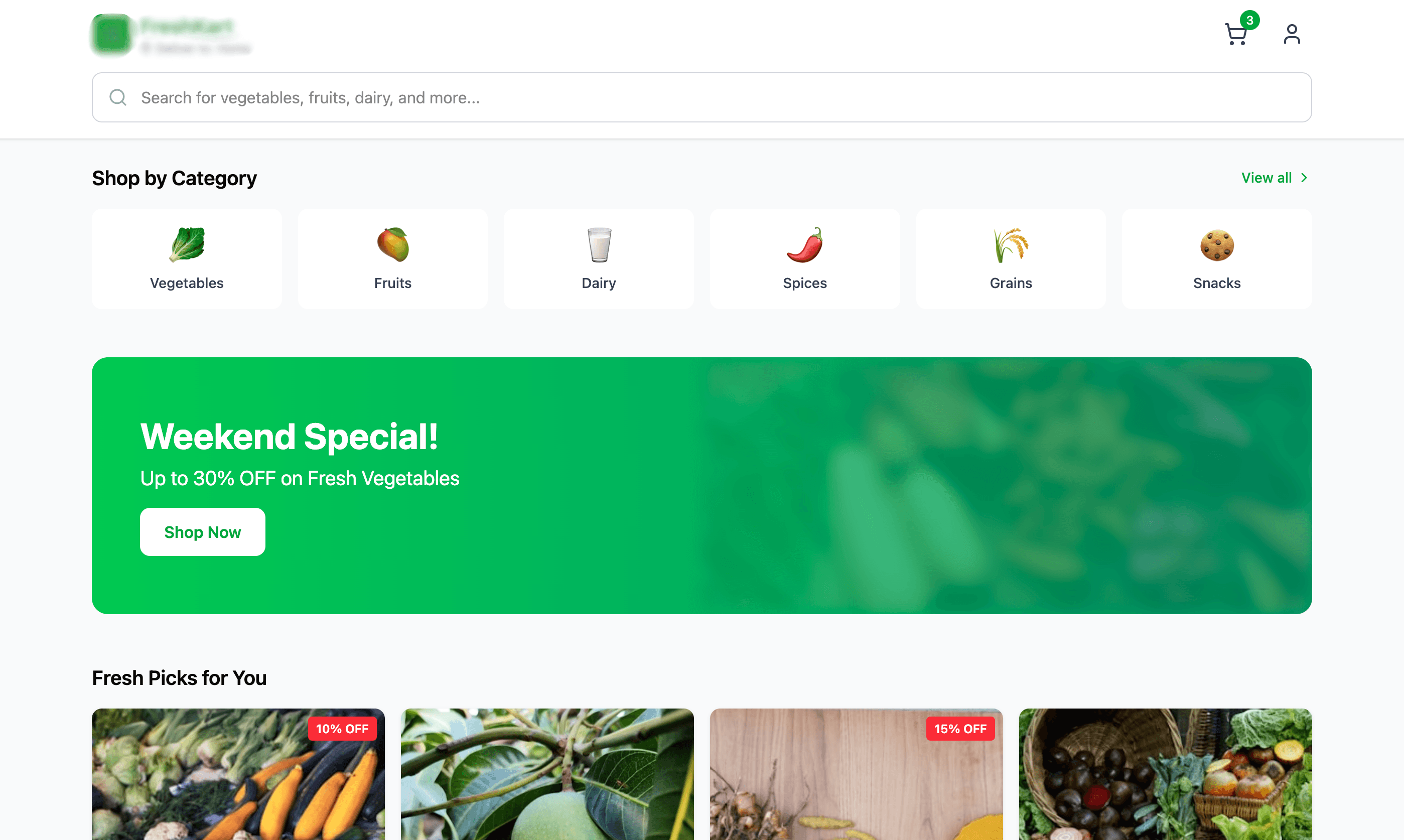
The platform combined geospatial intelligence, event-driven backend systems, and live operational synchronization to solve core scalability challenges commonly faced in on-demand service architectures.
Geofencing & Location Intelligence
A naive implementation of service availability based purely on city-level mapping created operational inconsistencies, inaccurate provider discovery, and failed bookings near boundary regions.
This was solved through dynamic geofencing architecture powered by coordinate-based zone evaluation, radius-aware service validation, and real-time distance computation pipelines.
Geospatial filtering systems were integrated directly into booking eligibility flows, enabling accurate service discovery based on live user location rather than static administrative boundaries.
Location-aware execution dramatically improved booking precision, provider targeting efficiency, and operational reliability across distributed service zones.
Real-Time Operational Systems
Traditional polling-heavy synchronization models introduced stale operational data, delayed booking visibility, and inconsistent provider states during high activity windows.
To eliminate synchronization latency, the platform leveraged WebSocket-driven real-time systems, live subscription pipelines, and event-stream-based state propagation across booking flows.
Booking updates, provider responses, service acceptance states, and operational transitions were synchronized in near real time, enabling highly responsive dispatch workflows across users and providers simultaneously.
The result was a significantly more reactive operational layer capable of supporting concurrent activity without degrading user experience.
Notification Architecture
Basic notification implementations often create delivery duplication, stale device mappings, and inconsistent targeting during large-scale operational events.
A scalable notification infrastructure was implemented using multi-device token management, event-triggered delivery systems, and distributed notification pipelines capable of targeting users, providers, and operational groups independently.
Notification dispatch was tightly integrated into backend event streams, enabling instant operational alerts for booking creation, provider assignment, acceptance, escalation, cancellation, and workflow progression.
The architecture prioritized delivery reliability, token lifecycle management, and low-latency event communication across mobile ecosystems.
Scalable Dispatch Workflows
Conventional dispatch models struggle under concurrency when multiple providers attempt to interact with the same operational request simultaneously.
This challenge was addressed using transactional dispatch orchestration, concurrency-aware booking locks, atomic assignment flows, and state-consistent provider allocation pipelines.
Real-time provider discovery, distance-aware prioritization, and asynchronous acceptance handling enabled the platform to scale dispatch operations without introducing race conditions or inconsistent booking ownership states.
Distributed workflow handling ensured that operational throughput remained stable even during high-frequency booking spikes.
Event-Driven Backend Infrastructure
Monolithic request-response execution patterns introduced operational bottlenecks and tightly coupled business flows that became increasingly difficult to scale.
The backend architecture evolved around event-driven communication models where booking lifecycle events triggered isolated operational services asynchronously.
Booking creation, provider matching, analytics tracking, notification dispatch, and workflow progression were decoupled into independently executable backend pipelines using distributed event handling systems.
This significantly improved scalability, operational resilience, fault isolation, and backend extensibility while reducing synchronous processing overhead across the platform.
Engineering Footprint
The system leveraged Next.js, React Native, Node.js, Firebase, Firestore, Cloud Functions, Redis, WebSockets, and geospatial computation systems to create a scalable real-time booking ecosystem optimized for hyperlocal operations.
The final architecture operated less like a traditional booking application and more like a distributed operational network capable of coordinating live location intelligence, provider allocation, and event-driven service execution at scale.